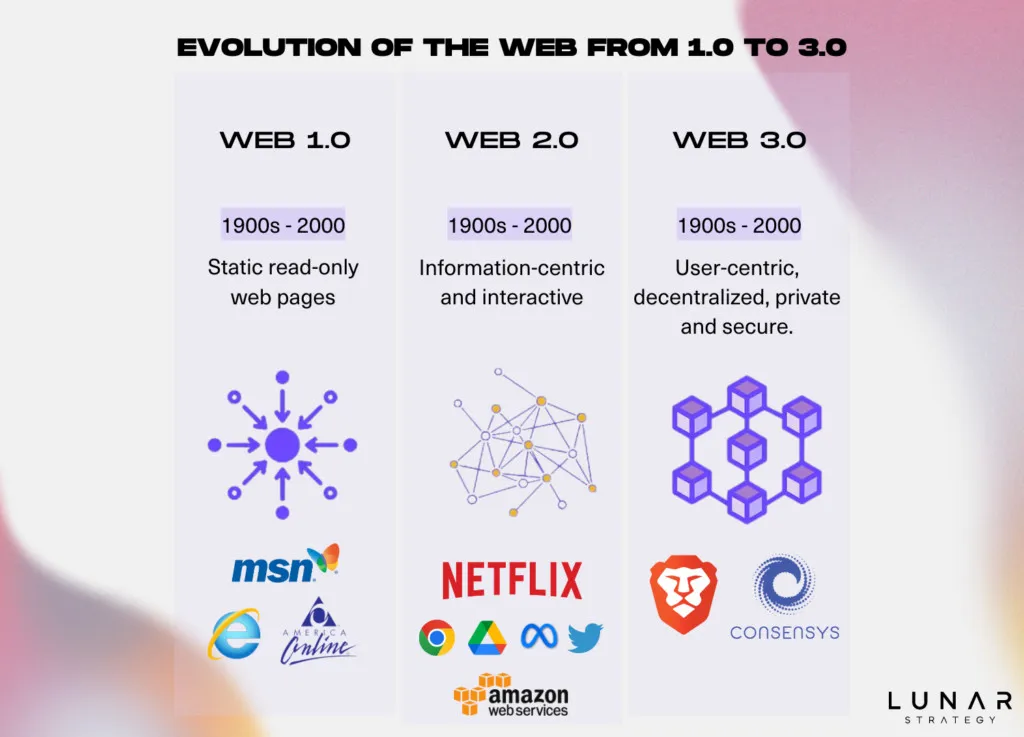
Defining web3 social infrastructure
Traditional social media operates like a rented apartment. You live there, build a community, and create content, but the landlord owns the building. If the platform changes the rules or shuts down your account, you lose your audience and your data. Web3 social infrastructure flips this model by putting ownership back in your hands. Instead of storing your profile and posts on a centralized server, your digital identity and content live on decentralized protocols.
Think of it as moving from a walled garden to an open network. In the old system, your followers are locked into one app. In web3 social infrastructure, your social graph—your connections and reputation—is portable. You can take your history and relationships with you to different applications built on the same underlying protocols. This composability means your digital identity isn't tied to a single company's survival.
This shift is foundational for creator monetization. When you own your audience, you don't need a platform to mediate the relationship between you and your fans. You can accept payments, distribute revenue, or sell access directly, without a middleman taking a significant cut. It transforms social interaction from a service provided by a corporation into a utility you control.
Core tools for onchain growth
Building a sustainable audience in web3 social infrastructure requires more than just posting content; it demands platforms that align creator incentives with community retention. The right tools allow you to own your audience graph, monetize directly through tokens or subscriptions, and retain control over your data. This shift from platform-dependent publishing to onchain ownership is the foundation of modern creator economy growth.
The landscape has matured significantly. Early experiments with fragmented social tokens have given way to integrated ecosystems that combine social networking with financial primitives. As noted by Alchemy, the current array of web3 social media dapps spans multiple blockchains, including Aptos, Arbitrum, and Base, offering creators diverse options for deployment and audience reach [Alchemy]. This diversity ensures that you can choose infrastructure that matches your technical comfort and audience preferences.
To help you navigate these options, we compare the leading platforms below. The goal is to highlight how each tool facilitates community building and monetization, rather than just listing features. Understanding these differences is essential for selecting web3 social infrastructure that supports long-term growth.
| Platform | Consensus | User Base | Monetization |
|---|---|---|---|
| Farcaster | Optimistic Rollup (Base) | ~100k+ active users | Direct tips, NFTs, sponsorships |
| Lens Protocol | Polygon PoS | Growing developer ecosystem | NFTs, subscriptions, grants |
| Nostr | Decentralized relays | Large, niche communities | Lightning Network tips, Zaps |
The table above outlines the structural differences between three dominant approaches. Farcaster leverages Ethereum's Layer 2 scaling for a stable, app-like experience. Lens Protocol offers a programmable social graph for developers building custom applications. Nostr prioritizes censorship resistance through a relay-based architecture. Each model presents distinct trade-offs for audience retention and monetization speed.
Choosing the right infrastructure depends on your specific goals. If you prioritize ease of use and immediate community engagement, Farcaster is a strong candidate. For developers building custom social apps, Lens provides the necessary flexibility. Nostr suits those who value ideological alignment and censorship resistance above all else. The key is to start with one platform, master its mechanics, and expand your web3 social infrastructure as your audience grows.
Monetization models explained
Web3 social infrastructure shifts the power dynamic by allowing creators to own their audience and revenue streams directly. Instead of renting an audience from centralized platforms, creators use decentralized protocols to build sustainable income models. This shift turns social interaction into a verifiable asset class, where value is captured by the people who produce the content and engage with the community.
Subscriptions and Token Gating
Subscriptions remain the most familiar entry point for monetization, but web3 adds a layer of ownership. Creators can issue tokens or NFTs that act as keys to exclusive content, communities, or early access. This model, often called token gating, ensures that only verified members can participate. Platforms like UXLINK facilitate this by combining familiar social networking features with financial applications, allowing over 7 million users to manage these access rights seamlessly.
Tipping and Direct Support
Tipping in web3 is frictionless and transparent. Unlike traditional payment processors that take significant cuts, on-chain tips can be sent instantly with minimal fees. This direct support model empowers creators to receive value for everyday interactions, not just large purchases. It transforms casual engagement into tangible revenue, fostering a closer relationship between the creator and their most loyal followers.
IP Ownership and Licensing
Perhaps the most transformative aspect is intellectual property (IP) ownership. In traditional social media, the platform often retains rights to content or monetizes it without sharing profits. In web3, creators retain full custody of their IP. This allows for new licensing models where fans can buy fractional ownership of a creator’s work, such as music, art, or video series. The creator benefits from secondary sales, creating a perpetual revenue stream that grows as the IP’s value increases.
Market Context
The viability of these models is reflected in the market activity of community tokens. While prices fluctuate, the underlying infrastructure supports real economic activity. Understanding these token dynamics is crucial for creators who may hold or trade assets related to their platforms.
Market trends and adoption data
The market for web3 social infrastructure is moving from experimental to essential. Creators and platforms are shifting away from purely speculative tokens toward tools that offer real utility: decentralized identity, direct monetization, and ownership of audience data. This transition is driven by a growing recognition that the current centralized social model is fragile and extractive.
Recent data from Ethereum.org highlights that while the ecosystem is young, it is rapidly evolving. The current reliance on centralized backends like GitHub, Discord, and Twitter is seen as a temporary bottleneck. As web3 social infrastructure matures, the goal is to replace these choke points with open, interoperable protocols that give control back to the user.
To understand the momentum, it helps to look at the broader market sentiment. The following chart tracks the performance of the Web3 Social Index, reflecting investor and developer confidence in this specific niche over the last six months.
Adoption isn't just about price; it's about activity. As more creators experiment with these tools, the network effects begin to compound. We are seeing a quiet but steady migration of high-value users who are tired of algorithmic opacity and prefer the transparency of on-chain interactions. This shift is the real signal of a healthy market, not just the volatility of tokens.
Building a sustainable web3 strategy
Web3 social infrastructure offers creators true ownership of their audience and data, but it requires a different approach than traditional social media. Instead of chasing viral trends, you build a durable asset that grows with your community. This section outlines how to implement these tools without burning out.
Before launching, define what you are offering. Are you selling exclusive content, governance rights, or community access? Clarity prevents feature creep. Focus on one core benefit that justifies why users should hold a token or NFT to interact with you.
Not all platforms are built the same. Some prioritize content permanence, while others focus on reputation or token-gated access. Research protocols like Gitcoin or Lens to understand where your specific audience already gathers. Aligning with an existing ecosystem saves you from building in isolation.
Friction kills adoption. Ensure your onboarding process is as smooth as possible. Use account abstraction or social logins where available to hide the complexity of private keys from casual users. The goal is to make wallet interaction feel invisible until it matters.
Don't aim for a million users on day one. Start with 100 true fans who understand the value. Test your token-gated posts, voting mechanisms, and payment flows with this small group. Their feedback will shape a more robust infrastructure for when you scale.
Building a sustainable web3 strategy is about consistency, not complexity. By focusing on value, choosing the right tools, and starting small, you can create a monetization model that lasts. Remember, your community is your most valuable asset in this new social landscape.
Frequently asked: what to check next
New creators often worry that building on web3 social infrastructure requires advanced coding skills or complex technical setups. In reality, most modern platforms have abstracted the blockchain layer away, allowing you to focus on content and community just as you would on traditional social media. The primary difference is that you retain ownership of your audience and revenue streams, removing the risk of sudden platform bans or algorithm changes.
Another common concern is the perceived complexity of managing digital assets. While the terminology can feel intimidating at first, the user experience is rapidly improving. Many web3 social apps now support "social login" methods, meaning you can connect using an email or even a Web2 social account, with the wallet creation happening silently in the background. This lowers the barrier to entry significantly, making it accessible for creators who are not yet crypto-native.
Finally, creators often ask if the market is too saturated or volatile to be viable. While the space is competitive, the monetization models are fundamentally different. Instead of relying on ad revenue shares controlled by a corporation, web3 social infrastructure enables direct creator-fan economies through tokens, memberships, and on-chain interactions. This shift allows for more sustainable income streams that grow directly with your community's engagement, rather than depending on third-party advertiser budgets.
Helpful gear
Use these product recommendations as a starting point, then choose the size, material, and price point that fit how you actually use the gear.


As an Amazon Associate, we may earn from qualifying purchases.
No comments yet. Be the first to share your thoughts!